Why Sandia
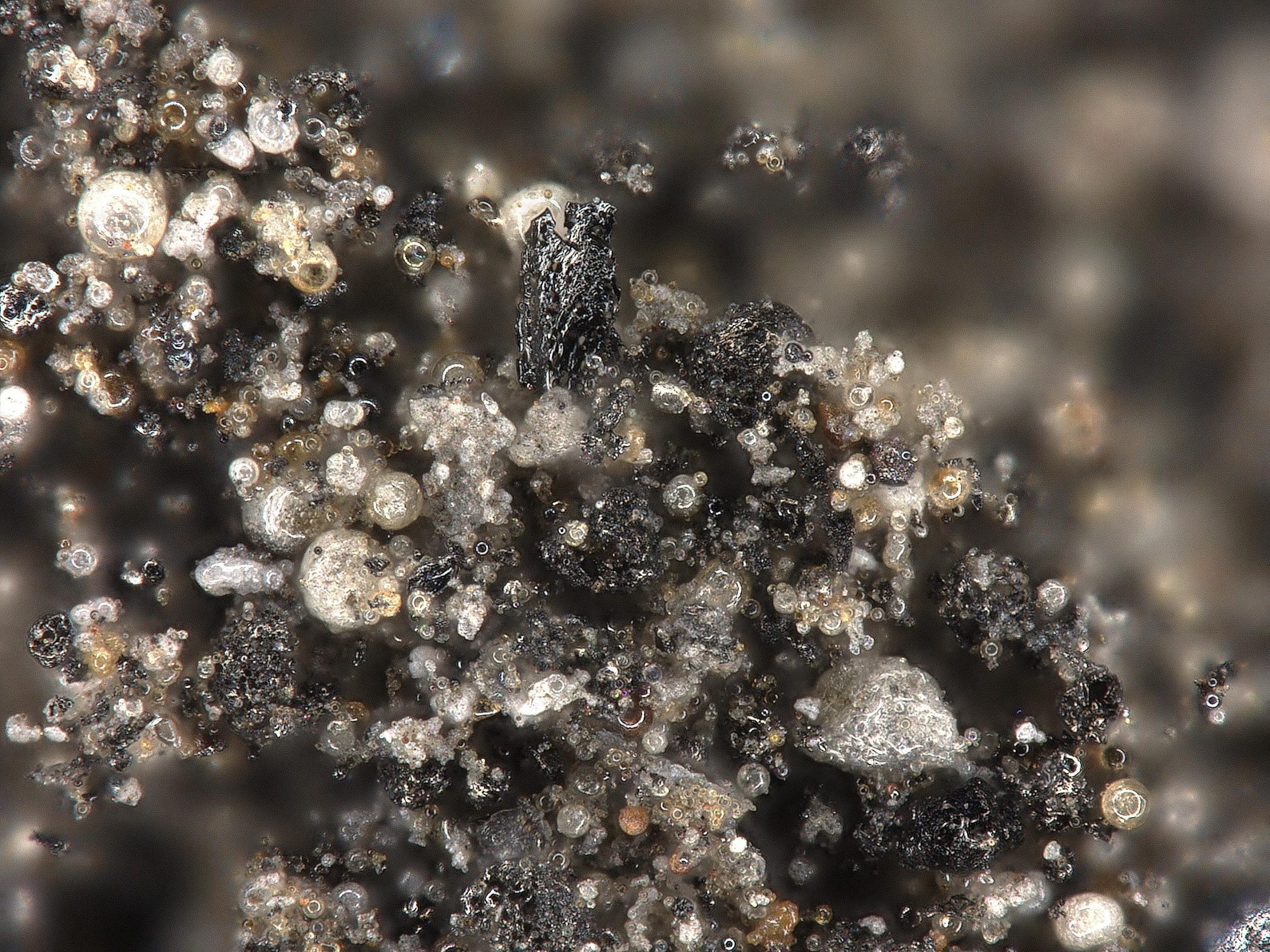
Sandia’s Geomechanics and Geochemistry group is dedicated to advancing America’s critical minerals supply chains and accelerating next-generation energy technologies. Our work strengthens national energy security and powers the future by developing innovative methods to extract, recover, and recycle rare earth elements from both conventional and unconventional sources. We prioritize environmentally responsible approaches using domestic resources, world-class facilities, and deep expertise in energy and security.
Our capabilities are enhanced by complementary research and legacy strengths in geothermal science, geoscience, materials science, nanoscience, power electronics, and bioenergy. This multidisciplinary expertise enables us to help build reliable, resilient, secure, and globally competitive domestic critical mineral and materials supply networks.
Capabilities
Geomechanics
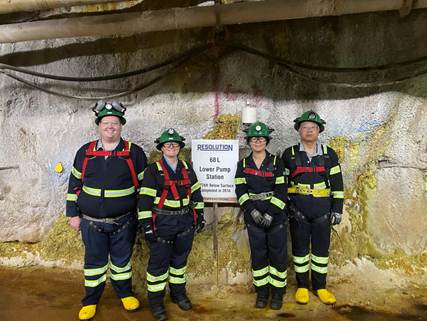
Sandia’s geomechanics research integrates laboratory experiments with field observations to address critical challenges in rock mechanics and subsurface site monitoring. Our work focuses on understanding the mechanical behavior and stability of geological formations relevant to critical mineral recovery. This work includes studying stress, deformation, fracture propagation, and fluid flow in subsurface environments. These insights help optimize extraction methods and ensure safe, efficient, and environmentally responsible resource development.
Geochemistry
Our geochemistry capabilities encompass experimental and computational approaches to study chemical processes at mineral-fluid interfaces. We investigate solution chemistry, separation and extraction techniques, and interfacial reactions that influence mineral recovery. Using molecular-scale modeling and density functional theory, we explore fundamental material behaviors and chemical interactions. Our research supports the development of quantitative models across multiple spatial and temporal scales, enabling improved prediction and control of geochemical processes.
Together, these complementary capabilities allow Sandia to address complex challenges in critical mineral recovery — from understanding subsurface mechanical properties to unraveling chemical mechanisms — providing a comprehensive foundation for advancing sustainable and secure supply chains.
Facilities
Sandia’s Geochemistry and Geomechanics Laboratories provide advanced experimental and modeling capabilities to support critical minerals research and energy technologies. Our Geochemistry Labs focus on chemical interactions at mineral-fluid interfaces and environmental effects on fractures, while the Geomechanics Lab measures rock properties under realistic subsurface conditions, including high pressures and temperatures. Together, these facilities enable research across applications, such as geothermal energy, mining, and subsurface storage, and help build secure energy supply chains.
Learn more about our facilities:
Current Work and Future Direction
Sandia continues to conduct fundamental research supporting the Department of Energy’s mission to develop a reliable and secure energy supply chain. Our efforts focus on innovative technologies and methods that enhance the resilience and sustainability of critical mineral resources essential for energy and national security.
Sandia manages a portfolio of projects funded by internal LDRD, and external sponsors such as FE/CMEI, HGEO, BETO, and ARPA-E. These projects focus on sensing, characterization, separation, and recovery of critical minerals to strengthen America’s energy security.
Investments in critical materials also support Sandia’s core mission, addressing legacy and emerging materials challenges related to nuclear deterrence and national security. Many of these technologies have dual-use applications in semiconductors, microelectronics, power electronics, and navigation and sensing systems.
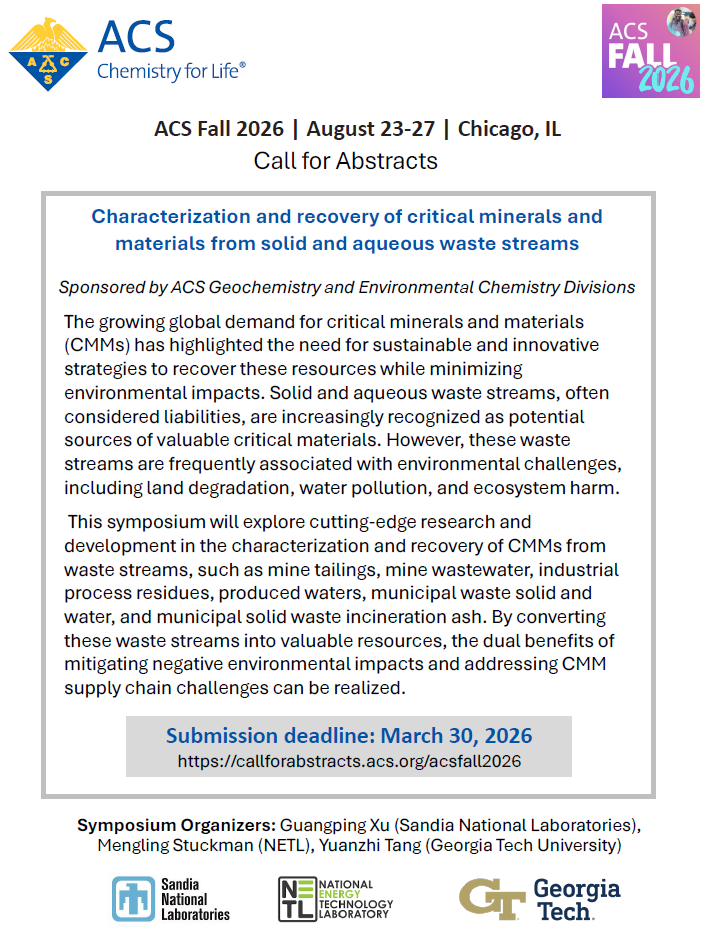
Critical Minerals Symposium at ACS Fall Meeting
In August 2026, Sandia, in collaboration with NETL and Georgia Tech, will host a national platform to bring together experts in critical minerals research. This event aims to accelerate knowledge exchange and foster collaboration across the field.