
Sandia’s approach and methodology to Space Nuclear Launch Safety is centered around the modeling of detailed simulations, combined with Monte Carlo sequence codes, to create a probabilistic risk analysis. This methodology combination aids in the identification and mitigation of the main sources of risk to create a basis for a successful mission launch.
Launch Safety Analysis Approach
Launch safety analysis approach seeks to identify main sources of launch risks and possible associated mitigating actions. By applying quantitative estimates of risks that are defensible and credible, the overall mission risk should be reduced.
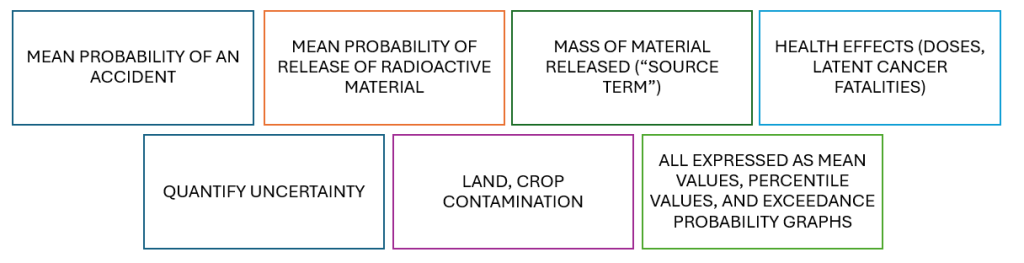
Risk Estimation Methodology
Risk estimation methodology combines detailed simulations and Monte Carlo sequence codes to develop probabilistic risk analysis including potential accidents associated with the launch, a detailed understanding of the response of system to insults, and analysis of atmospheric transport and consequences.
Characterization of Risk
The characterization of risk is derived from research methods applied to generate specific probabilities of interest to define the risk picture for decision makers.
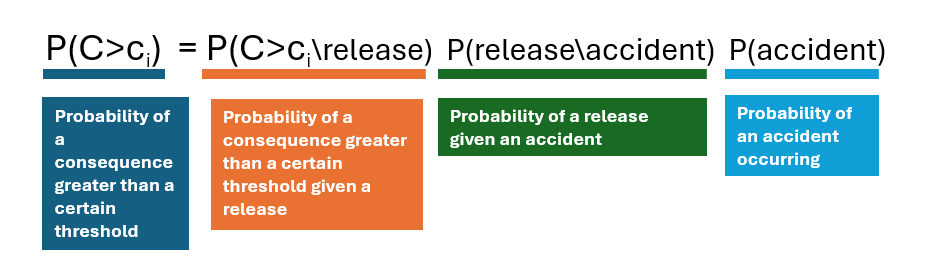
Sandia quantifies the results into a probabilistic estimate of radiological risk and documents the analyses in a Safety Analysis Report (SAR).
The SAR provides the results of the safety assessment and is an essential document in the nuclear launch safety approval process. During preparation of the SAR, Sandia interfaces with multiple agencies as needed. For example, for the Mars 2020 mission Sandia interfaced with DOE, NASA Jet Propulsion Laboratory (JPL), Interagency Nuclear Safety Review Panel (INSRP), Idaho National Laboratory (INL), and Los Alamos National Laboratory (LANL).
Current Projects
Current projects, as of May 2026, include:
- NASA SR-1 full space nuclear system safety analyses
- Charles Stark Draper Laboratory follow on safety analyses
- Zeno Power systems additional scoping studies, preliminary tier evaluations, and safety analyses
- City Labs preliminary tier evaluations
- entX preliminary tier evaluations
Completed Projects
Completed projects, as of May 2026, include:
- Mars Science Laboratory (MSL) 2011 Final Safety Analysis Report (FSAR): Sandia partnered with NASA’s Mars Science Laboratory (MSL) mission to produce the FSAR for the 2011 Curiosity rover launch. Due to the radioactive material contained in the Multi-Mission Radioisotope Thermoelectric Generator (MMRTG), a safety analysis needed to be performed to model accidents and potential release of material into the environment. Launch approval was supported by the FSAR generated by Sandia and ultimately, launch approval was given. The MSL mission successfully launched from Cape Canaveral and landed on Mars. Click here for a link to a publicly available conference proceeding discussing the MSL source terms.
- Mars 2020 Nuclear Risk Assessment: Sandia worked with NASA’s Mars 2020 mission to support the initial Environmental Impact Statement (EIS). NASA prepared an EIS in 2013-2014 in accordance with the National Environmental Policy Act – NEPA. Included in the EIS is information on the launch accidents risk to the general public and on-site workers at the launch complex. The Nuclear Risk Assessment documented the initial analyses of the Multi-Mission Radioisotope Thermoelectric Generator (MMRTG) during potential accident conditions for the Mars 2020 mission. The EIS was successfully issued, and the Mars 2020 mission was able to proceed. Click here for a link to the publicly available Mars 2020 Nuclear Risk Assessment.
- Mars 2020 Final Safety Analysis Report: Sandia partnered with NASA’s Mars 2020 mission to generate a Final Safety Analysis Report (FSAR) for the 2020 Perseverance rover launch. This mission included the use of radioactive materials in a single Multi-Mission Radioisotope Thermoelectric Generator (MMRTG) to provide continuous power and heat for the mission. The radioactive nature of the fuel requires that safety and environmental protection be an inherent part of the design. The nuclear risks associated with the mission are described in an 1800-page mission FSAR, detailing the analyses and rigor involved in following standards that lead to safety and mission launch success. Click here for a link to the publicly available update to the Mars 2020 NRA based on the results from the Mars 2020 FSAR.
- DARPA and NASA DRACO Nuclear Risk Assessment and Lessons Learned reports: scoping studies and lessons learned.
- Air Force Research Laboratory proof of concept analysis.
- Charles Stark Draper Laboratory scoping studies and safety analyses.
- City Labs scoping studies.
- Lockheed Martin Space Systems scoping studies.
- Zeno Power systems scoping studies and preliminary tier evaluations.
Click here to return to main Space Nuclear Systems Launch Safety landing page.