
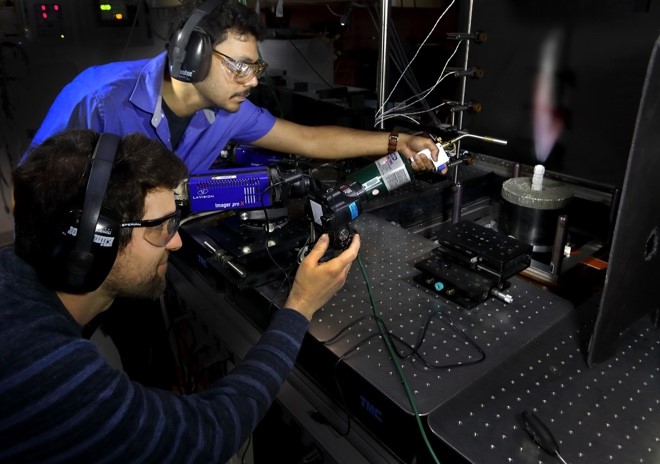
Sandia’s hydrogen safety codes and standards research program develops the technical data and scientific understanding to inform science-based improvements to the codes and standards that define the safe use of hydrogen.
Research includes studies on the fundamental behavior and characteristics of a hydrogen release, such as dispersion, accumulation, ignition, flame radiation, and overpressure. The team also develops models to describe these phenomena and generates high-fidelity data to validate and verify models.
Turbulent Combustion Laboratory
The Turbulent Combustion Laboratory (TCL) at the Livermore, CA site provides a well-controlled, lab-scale environment for testing hydrogen release characteristics. Outfitted with several lasers, the TCL is uniquely suited to make high-fidelity, non-intrusive measurements of hydrogen release and combustion phenomena. The optical diagnostics employed in this laboratory include line-imaged Raman scattering, Rayleigh scattering, laser-induced fluorescence, particle imaging velocimetry, and Schlieren flow visualization. These optical diagnostics are applied to both high-pressure and cryogenic hydrogen releases.
Large Scale Releases
Staff at Sandia team with researchers from Lawrence Livermore National Laboratory (LLNL) to apply optical diagnostics to large-scale releases from a liquid hydrogen tank at LLNL. These large-scale releases allow models to be evaluated in a realistic environment at higher flowrates than can be achieved in the lab. Large scale studies also take place at several facilities at the Albuquerque, NM site. For example, the pooling and vaporization of liquid hydrogen can be studied at the Thunder Range test site within a large, enclosed shock tube where the crosswind can be well-controlled.
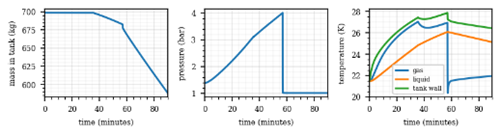
Derek M. Machalek, Gabriela Bran Anleu, and Ethan S. Hecht. Influence of Non-equilibrium Conditions on Liquid Hydrogen Storage Tank Behavior. Proceedings of the International Conference on Hydrogen Safety 2021.
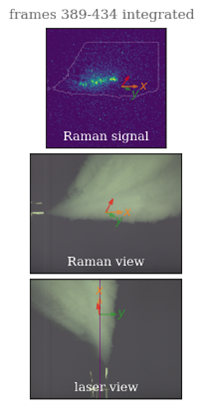
Ethan S. Hecht and Nick J. Killingsworth. Effect of Wind on Cryogenic Hydrogen Dispersion from Vent Stacks. Proceedings of the International Conference on Hydrogen Safety 2021.
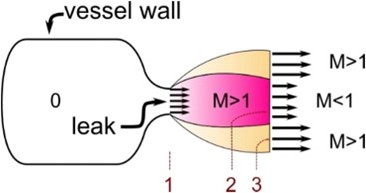
Xuefang Li, Bikram Roy Chowdhury, Qian He, David M. Christopher, and Ethan S. Hecht. Validation of a two-layer model for underexpanded hydrogen jets. International Journal of Hydrogen Energy 46 (23), 2021, pp. 12545-12554
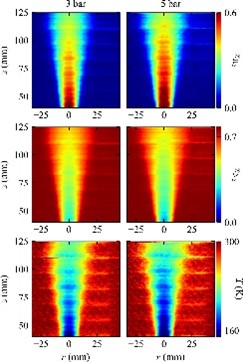
Bikram Roy Chowdhury and Ethan S. Hecht. Dispersion of cryogenic hydrogen through high-aspect ratio nozzles. International Journal of Hydrogen Energy 46 (23), 2021, pp. 12311-12319
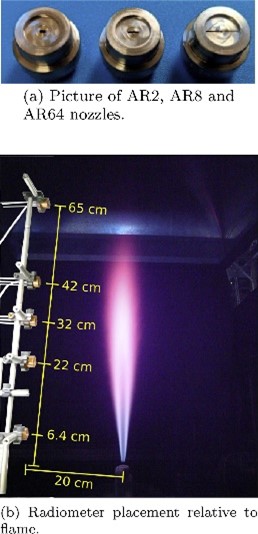
Ethan S. Hecht and Bikram Roy Chowdhury. Characteristic of cryogenic hydrogen flames from high-aspect ratio nozzles. International Journal of Hydrogen Energy 46 (23), 2021, pp. 12320-12328
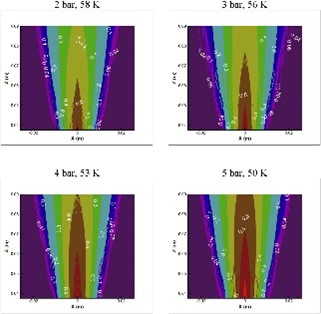
S.G. Giannissi, A.G. Venetsanos, and E.S. Hecht. Numerical predictions of cryogenic hydrogen vertical jets. International Journal of Hydrogen Energy 46 (23), 2021, pp. 12566-12576
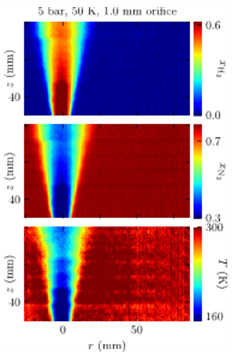
Ethan S. Hecht and Pratikash P. Panda. Mixing and warming of cryogenic hydrogen releases. International Journal of Hydrogen Energy 44 (17), 2019, pp. 8960-8970
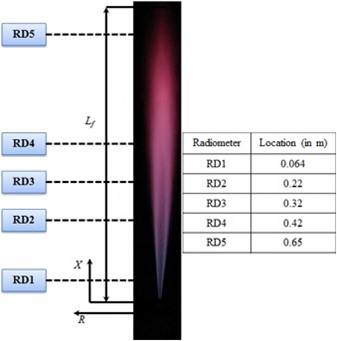
Pratikash P. Panda and Ethan S. Hecht. Ignition and flame characteristics of cryogenic hydrogen releases. International Journal of Hydrogen Energy 42 (1), 2017, pp. 775-785