
Today, October 8, the nation celebrates Hydrogen and Fuel Cell Day, a day chosen to match the atomic weight of hydrogen, 1.008. Hydrogen and fuel cells play an important and growing role in domestic energy security and resilience.
Sandia brings decades of experience in material design and compatibility, system analysis, and risk assessment to the advancement of hydrogen and fuel cell technologies. The strong foundational science is used to update codes and standards, assess system risk, and advance industrial uses of hydrogen.
Here we highlight some of Sandia’s recent contributions to hydrogen and fuel cell research and development. Want more hydrogen highlights? Read our previous roundup of key capabilities and accomplishments.
Evaluating catalysts for alternative liquid organic hydrogen carrier systems
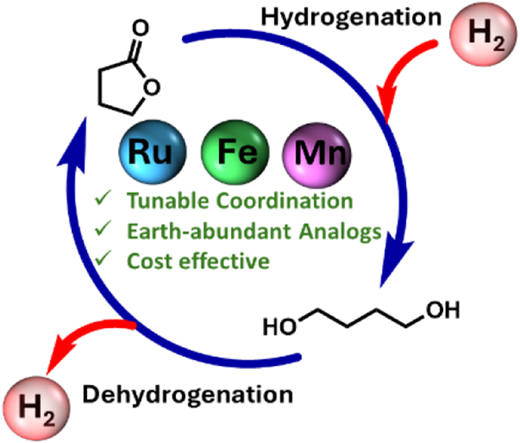
A Sandia team investigated liquid organic hydrogen carriers (LOHCs) as a way to store hydrogen as in a stable liquid form — a potentially safer and easier way to integrate hydrogen with existing infrastructure compared to other forms. They tested catalysts that “release” hydrogen by converting 1,4-butanediol (BDO) into γ-butyrolactone (GBL), and then “store” hydrogen again by converting GBL back to BDO. Several ruthenium- and manganese-based catalysts, including polymerized versions designed for reuse, performed exceptionally well, achieving near-complete conversion and essentially maximum hydrogen output. Overall, these results point to strong potential for practical LOHC hydrogen storage systems because efficient, reversible liquid-phase hydrogen cycling can simplify handling and transport, improve safety, and lower overall storage and distribution costs, helping make hydrogen energy more accessible and cost-effective.
Combining machine learning and targeted experimentation to discover and optimize materials for thermochemical hydrogen production
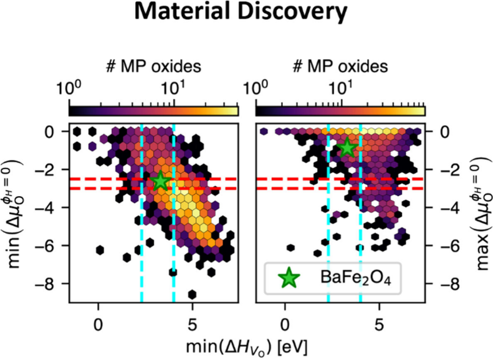
Sandia, in collaboration with Lawrence Livermore National Laboratory, National Laboratory of the Rockies, and SLAC National Accelerator Laboratory, is working to improve thermochemical hydrogen (TCH) production, a process that uses heat to split water and produce hydrogen fuel by cycling metal oxides through reduction and oxidation steps. Researchers used a machine learning model to predict how easily oxygen vacancies form in thousands of metal oxides, helping them quickly identify promising materials for TCH. They selected barium ferrite for experimental validation, which showed good water-splitting ability but had some thermal stability issues under harsh conditions. To fix this, some iron was substituted with aluminum, which improved stability and performance by changing the crystal structure. This combined approach of machine learning screening and human-in-the-loop experiments demonstrates a faster way to discover and optimize materials for efficient, cost-effective hydrogen production.
Leading in research and development for structural materials in hydrogen environments
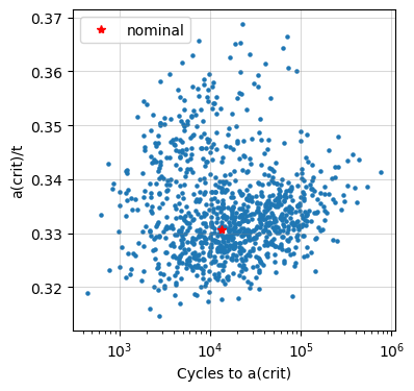
Sandia is a scientific leader in addressing the technical barriers to blending hydrogen in natural gas pipelines as a member of the HyBlend initiative led by the U.S. Department of Energy. Since DOE launched the HyBlend collaboration in 2021, Sandia has helped to provide the scientific basis and probabilistic tools to assess the structural integrity of pipelines exposed to hydrogen. To advance this work, Sandia hosted the 14th annual Study Group on Materials Testing and Qualification for Hydrogen Service in July 2026. The Study Group convenes industry, university, and national labs to discuss current issues and topics of materials testing and qualification for gaseous hydrogen service with a focus on research and development.
One of the tools developed as part of this work is HELPR, an open-source computer program that helps engineers check if natural gas pipelines are strong and safe enough to carry hydrogen mixed with natural gas. It uses modular, probabilistic fracture mechanics models to quickly figure out if tiny cracks or damage might cause the pipes to break over time. Additionally, a user manual will be released in fall 2026 to assist users in understanding HELPR’s engineering models and assumptions.
Sandia’s work in this area also includes testing and understanding the behaviors of metal alloys and polymers. In May 2026, a patent was awarded for a High-Pressure Test Fixture to test high-pressure polymer seals in hydrogen environments that are typical of the industry uses.
Driving innovation for hydrogen internal combustion engines
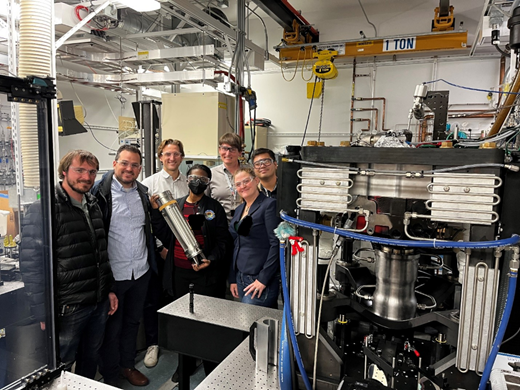
Building on decades of world-class advanced engine combustion research, Sandia researchers are working to address the barriers to commercialization for hydrogen internal combustion engines, also known as H2ICEs. The concept of a hydrogen-fueled internal combustion engine isn’t new — the technology dates back to the early 1800s — but challenges like power density, fuel-air mixing, and abnormal combustion have hindered development. This work will benefit from the recent opening of a heavy-duty optical engine lab at the Combustion Research Facility, which can be adapted for alternative fuels, like hydrogen. The lab is currently being leveraged to support testing of Noble Thermodynamics Systems’ Argon Power Cycle technology, which aims to increase efficiency and eliminate nitrogen oxide emissions for engines fueled with hydrogen-natural gas blends by replacing nitrogen with argon as the working fluid.
Laying the groundwork for geologic hydrogen
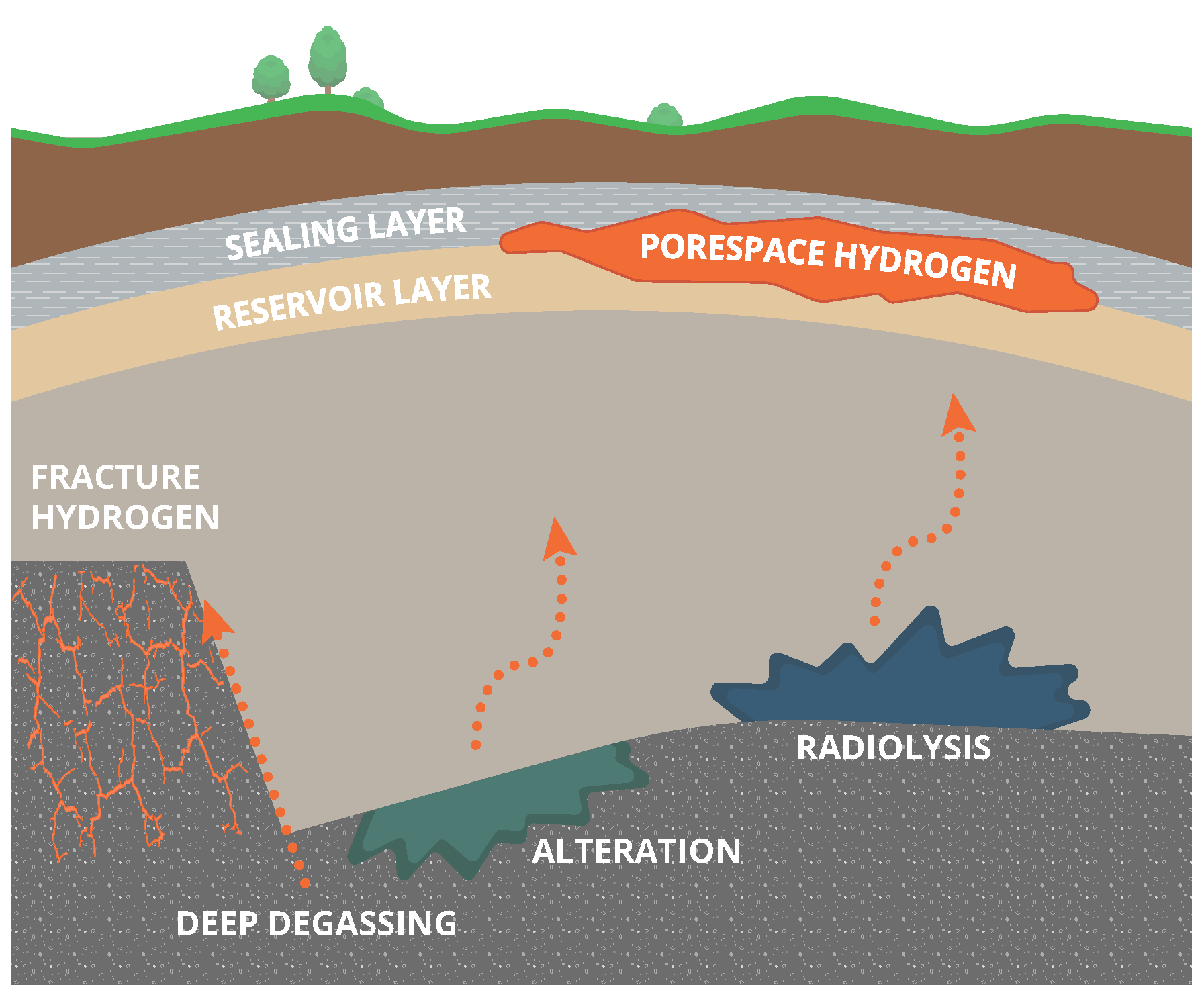
While we can produce hydrogen through industrial processes, it can also occur naturally or generated below the Earth’s surface. This geologic hydrogen is a promising primary domestic, low-cost energy resource but several key knowledge gaps remain before its full potential can be realized. With decades of expertise in hydrogen and geoscience research, Sandia is well positioned to address the complex challenges involved in identifying, assessing, and developing geologic hydrogen resources. Our researchers are also advancing new capabilities to enable rapid, accurate evaluation and development of natural hydrogen deposits and to demonstrate methods for stimulating subsurface hydrogen production through engineered thermal, mechanical, chemical, or microbiological processes.
October 8, 2026