
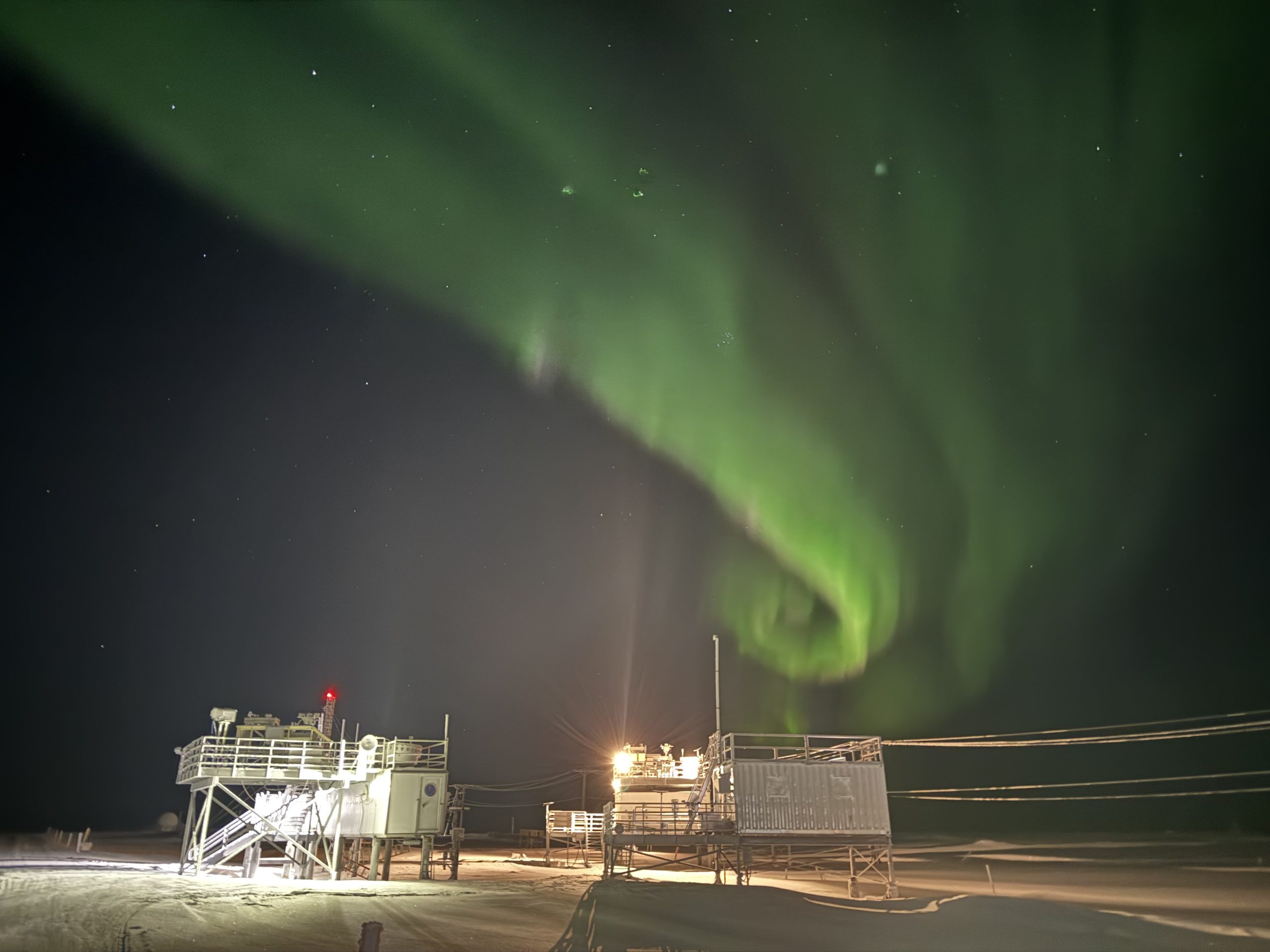
The Atmospheric Radiation Measurement (ARM) User Facility North Slope of Alaska (NSA) atmospheric observatory, a U.S. Department of Energy (DOE) scientific user facility, is a focal point for atmospheric and ecological research activity in the Arctic.
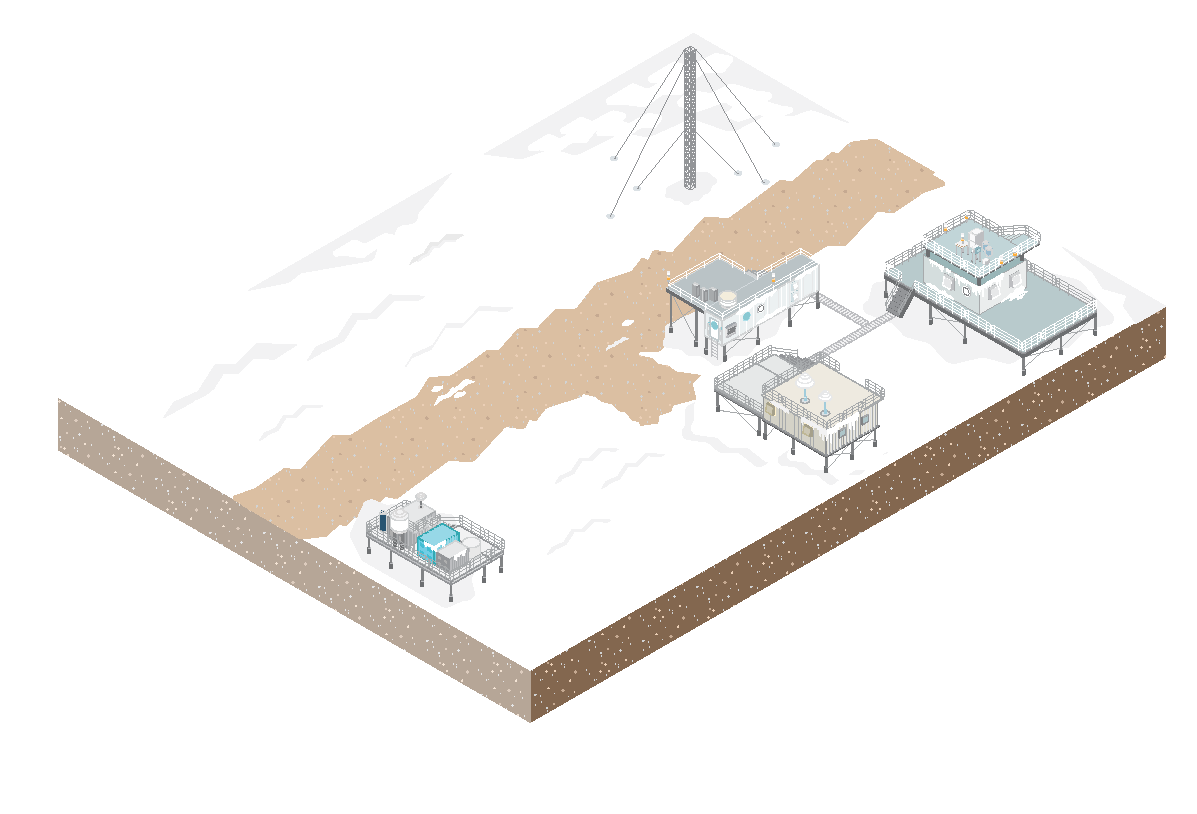
Managed by Sandia National Laboratories, the NSA central facility at Utqiaġvik (formally Barrow) has hosted continuous research near the coast of the Arctic Ocean since 1997. Many of the same instruments used at warmer ARM observatories have been hardened to withstand temperatures that drop well below negative 40°F at the site, which is located 320 miles north of the Arctic Circle and 1 mile south of the Arctic Ocean. The site provides comprehensive data about cloud and radiative processes at high latitudes. Scientists use data from the NSA to improve the representation of high-latitude cloud and radiation processes in earth system models.
Made to contribute to a large range of scientific investigations, the NSA observatory has supported approximately 80 field campaigns. The site recently supported the FATIMA-IF field campaign funded by the Office of Naval Research to improve fog prediction and detection capabilities in marine environments. Other uses for the NSA include validating satellite measurements, tracking sea-ice breakup with radar, augmenting data from other high-latitude areas, and testing new instruments, such as low-cost optical sensors for space domain awareness of low Earth orbit satellites.
Atmospheric Radiation Measurement (ARM)
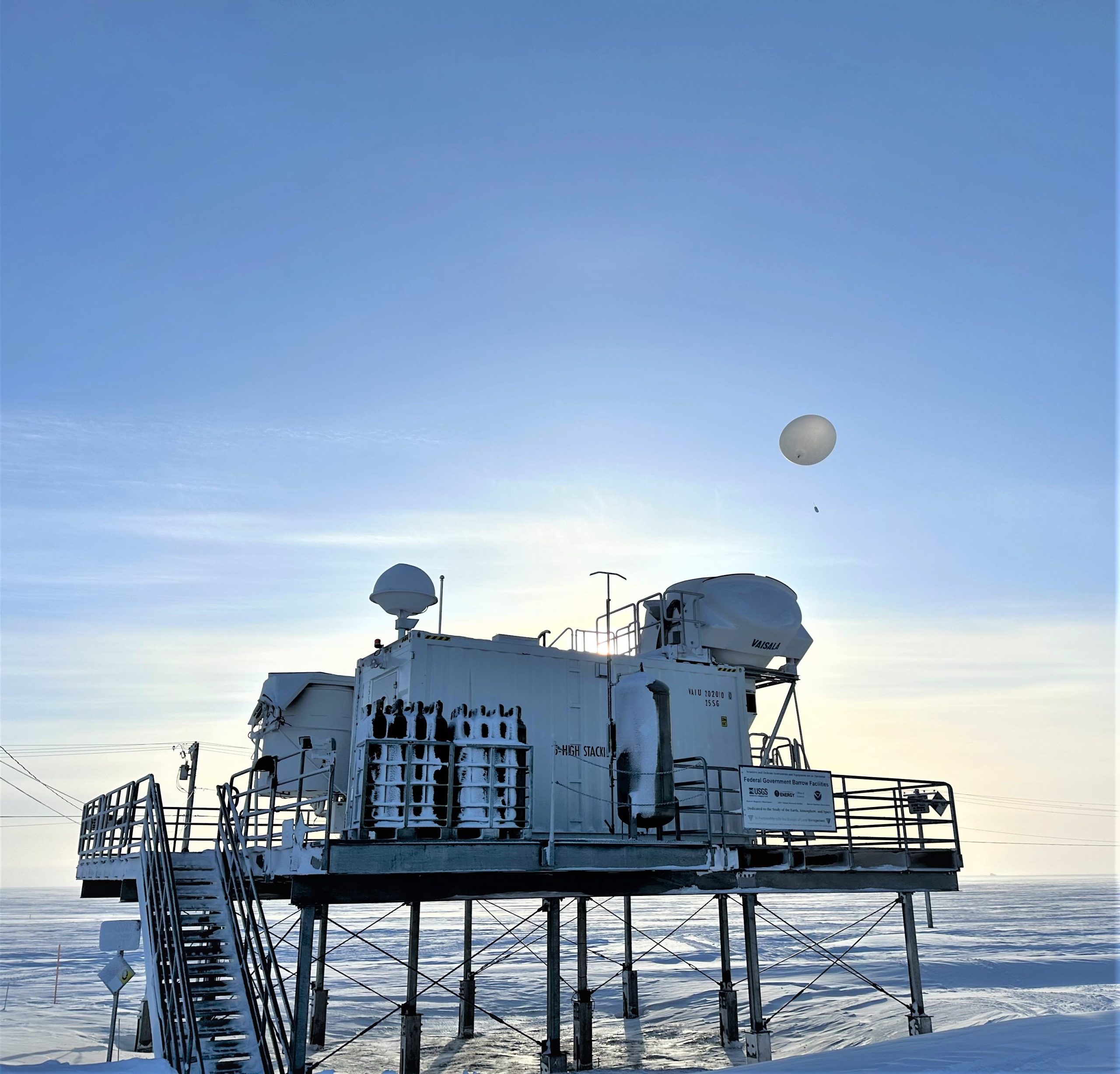
The U.S. Department of Energy’s Atmospheric Radiation Measurement (ARM) User Facility provides 30-plus years of atmospheric measurements, including data sets from all seven continents and five oceans, to advance the understanding of the Earth’s atmosphere.
Managed by the Biological and Environmental Research program, this DOE Office of Science user facility provides the research community with strategically located atmospheric observatories to improve the understanding and representation of cloud, aerosol, and precipitation processes in earth system models in support of DOE’s science, energy, and national security missions.
Contact
Andy Glen