Search

Results 451–475 of 624

Resource Characterization

Page • Sandia National Laboratories catalogues key statistics needed to assess energy conversion opportunities, constraints and risks at wave and tidal energy sites, including power density and metrics for environmental loads required for current energy converter (CEC) and wave energy converter (WEC) design. Marine energy resource classification systems developed by Sandia facilitate...

Rick Jayne

Staff Page • Research Hydrogeologist. Biography Rick is a research hydrogeologist with research interests at the intersection of geologic fluid systems and energy resources, including radioactive waste disposal (especially in salt), CO2 sequestration, geothermal energy resources, basin-scale fluid systems and groundwater availability in arid regions. To better understand these geologic fluid systems, Rick...

Rip V. Winckel

Staff Page • Environment, Safety and Health Coordinator. Biography Rip V. Winckel is an Environmental Health and Safety Coordinator supporting Sandia National Laboratories’ Concentrating Solar Power program and the National Solar Thermal Test Facility. Rip is experienced in Program Risk Management, Primary Hazard Analysis and Risk Assessments, Environmental Management Systems, Industrial Hygiene Surveys,...

Robert Keene

Staff Page • Manager, Solar Thermal Test & Demonstration . Robert Keene is manager of the National Solar Thermal Test Facility (NSTTF), which is operated by Sandia National Laboratories for the U.S. Department of Energy. Robert manages a staff of 25 engineers, technologists and students. His team is responsible for thermal testing operations...
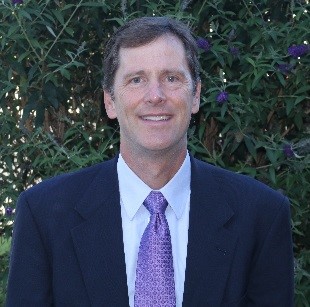
Corporate photo of NSTTF Manager Rob Keene

Roberta Gonzales

Staff Page • Business Management Professional. Biography Roberta Gonzales is a member of the laboratory staff and currently supports the National Solar Thermal Test Facility (NSTTF) in financial matters such as proposals, procurements, NSTTF Utilization fee billing which includes O&M and Test Fee collection and reconcilement and preparation of financial reports. She also...

Robotic Vehicle Range (RVR)

Facility • The Water Power Technologies department leverages these capabilities in robotics to support wave energy converter (WEC) design and testing. Visit the Robotics website

Rodrigo Trevizan

Staff Page • Electrical Engineer. Biography Rodrigo D. Trevizan is a Senior Member of Technical Staff at Sandia National Laboratories. Rodrigo authored research papers on the subjects of control of energy storage systems and demand response for power grid stabilization, power system state estimation, and detection of nontechnical losses in distribution systems. Rodrigo...

Ronald C. Matthews Jr.

Staff Page • Senior Member of Technical Staff. Biography Ronald C. Matthews received his B.S. in Mathematics and M.S. in Mathematical Sciences from the University of West Florida in 2005 and 2007 respectively. He earned his M.S. and Ph.D. in Electrical Engineering from Michigan Technological University in 2012 and 2018 respectively. He joined...

Ross Guttromson

Staff Page • Principal Member of Technical Staff. Biography Ross Guttromson received his B.S.E.E. and M.S.E.E. degrees from Washington State University, and his Executive MBA degree from the University of Washington. Ross is Principal Researcher in the area of Electric Power Systems at Sandia National Laboratories with focus on transmission operations and planning....

Rotor Aerodynamic Design

Page • Aerodynamic Design Overview Induced velocity in the rotor wake 0.1-3 diameters downstream of the rotor plane of the NREL 5MW wind turbine reference model, as predicted by a free-wake vortex method. Velocity vectors are projected in the planes shown. The aerodynamic design of a wind turbine rotor is performed using...

Rotor Blade Sensors and Instrumentation

Page • Rotor Blade Sensors and Instrumentation During a wind turbine’s operational lifetime, its rotor blades endure a wide variety of wind loading because the blades directly capture all of the force applied to the entire wind-turbine system. Sandia staff work on installation of blade instrumentation for research activities. A turbine’s exact...

Rotor Design

Page • Rotor Design Advanced rotor concepts from aerodynamics to instrumentation offer great potential for further improving wind plant performance and reducing energy costs. Sandia leads next-generation rotor development through: Open-source blade design platforms Custom tools for structural, aerodynamic, and cost design and analysis Sensors packages for structural and aerodynamic field testing...

Rotor Design Tools

Page • Rotor Design Tools Sandia develops computer-aided engineering (CAE) tools with capabilities driven by the needs of current research projects. Rotor design is supported by a collection of tools which enable design and optimization of the rotor aerodynamics and structural performance. This unique and customizable toolset enables innovative designs and research...

Rotor Innovation

Page • Rotor Innovation Rotor Innovation and Operations Advanced rotor concepts from aerodynamics, instrumentation, and reliability offer great potential for further improving wind plant performance and reducing energy costs. Sandia National Laboratories leads next-generation rotor development through: Open-source blade design platforms Custom tools for structural, aerodynamic, and cost design and analysis Sensors...

Rotor Reliability

Page • Rotor Reliability Blade Materials and Substructures Testing Wind turbine blades are subjected to a higher number of complex loading cycles not experienced in other applications of composite structures. These loads can lead to structural failure through various mechanisms such as a crack initiated at a flaw or structural detail such...

Roy Lopez

Staff Page • Principal Technologist. Biography C. Roy Lopez a Principal Technologist with the Resilient Energy and Distributed Systems Integration program at Sandia. This includes support for distributed energy resources, capabilities, performance, safety, interoperability, cybersecurity and grid support. Roy supports many of The PIs involved in power electronics materials and systems, Distributed Energy...

Ryan Coe

Staff Page • R&D Mechanical Engineer. Biography Ryan Coe received a B.S. degree in Ocean Engineering (2009) and a Ph.D. in Aerospace Engineering (2013), both from Virginia Tech, and he subsequently joined Sandia National Laboratories’ Water Power Technologies group in 2013. Ryan’s research focuses primarily on wave energy converters (WEC) modeling, testing, control,...

Ryan T. Elliott

Staff Page • Principal Member of Technical Staff. Biography Ryan T. Elliott received the Ph.D. degree in Electrical and Computer Engineering in 2020 from the University of Washington, Seattle, WA, USA, where he studied in the Renewable Energy Analysis Lab (REAL). He is currently a Principal Member of Technical Staff with the Electric...

Safer, more powerful batteries for electric cars, power grid

News Article, March 15, 2022 • Solid-state batteries with little liquid electrolyte are safer than lithium-ion batteries Solid-state batteries, currently used in small electronic devices like smart watches, have the potential to be safer and more powerful than lithium-ion batteries for things such as electric cars and storing energy from solar panels for later use. However,...
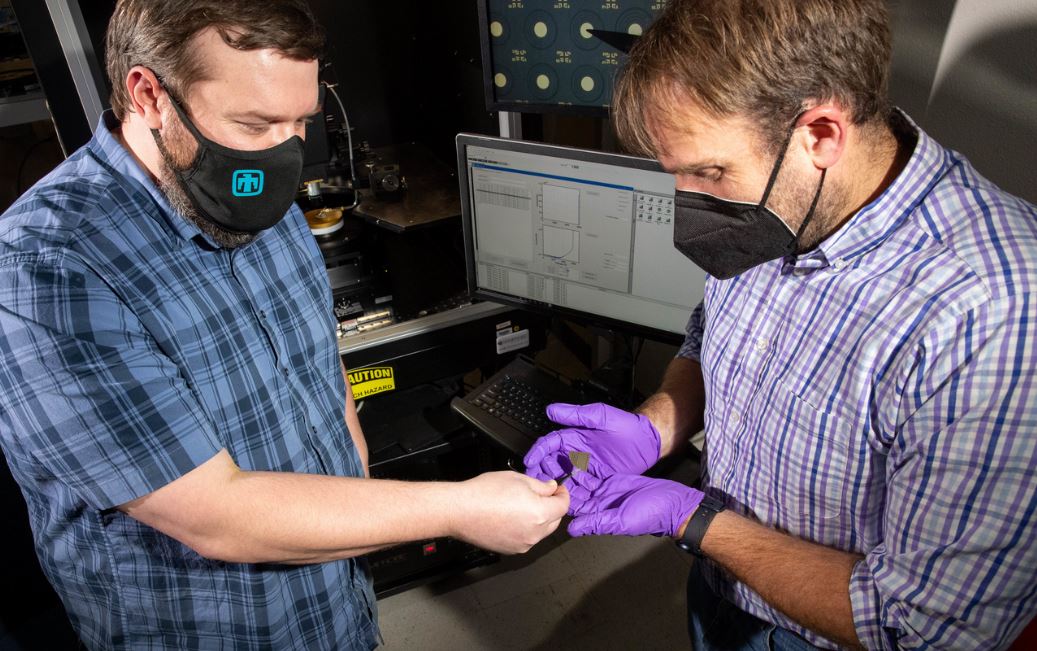
Sandia National Laboratories engineers, examine a lithium-ion battery in front of a specially designed battery testing chamber.

Safety and Reliability

Page • Sandia National Laboratories is advancing the understanding of safety and reliability of electrochemical energy storage systems for grid scale applications. Battery systems have the potential for improving the resiliency of the electric grid by providing on-demand energy storage for a variety of applications. The use of advanced battery technology however...

Safety, Safeguards, and Informed Security Design

Page • The next generation of nuclear reactors and fuel cycle facilities must incorporate Safety, Safeguards, and Security by Design (3SBD) in order to develop safe and secure facilities that meet regulatory requirements in an efficient manner. Sandia provides safeguards analysis capabilities that tie into safety and security expertise to design and...

Samuel T. Ojetola

Staff Page • Senior Member of Technical Staff . Biography Samuel T. Ojetola is a Senior Member of Technical Staff at Sandia National Laboratories. His expertise includes, power system dynamics and control, improvement of grid reliability and resilience to extreme events, machine-learning based protection for distributed networks, and resilient energy integration. Before joining...

Sandia addresses barriers to hydrogen-fueled internal combustion engines

News Article, November 18, 2024 • Pre-ignition is one of the key barriers preventing hydrogen-fueled combustion engines from achieving efficiency and power-density parity with current diesel powertrains. To address this issue, Sandia has developed an experimental framework to isolate and study various sources of pre-ignition. The research team recently updated the framework with a new methodology...
Conceptual schematic of the pre-ignition mechanisms in a hydrogen-fueled internal combustion engine (left). A multi-camera, high-speed system for testing and visualizing oil pre-ignition using Sandia's optical engine (right).

Sandia cloud-resolving climate model meets world’s fastest supercomputer

News Article, April 13, 2023 • Focused on the accuracy of climate predictions, a computational team led by Sandia National Laboratories recently achieved a major milestone with a cloud-resolving model they ran on Frontier, the world’s first exascale supercomputer. “We have created the first global cloud-resolving model to simulate a world’s year of climate in a...
A snapshot of a global simulation superimposed on a view of the earth from space

Sandia conducts cybersecurity research to reduce threats to nation’s wind fleet

News Article, February 17, 2023 • Wind energy-specific cybersecurity research and development is critical to the defensive protection of wind assets from cyber threats. The U.S. Department of Energy’s (DOE) Wind Energy Technologies Office (WETO) recognizes the need to assess risks and consequences associated with malicious activities—whether physical or cyber—and has prioritized the strengthening of the...
Results 451–475 of 624