Search

Results 71–80 of 625

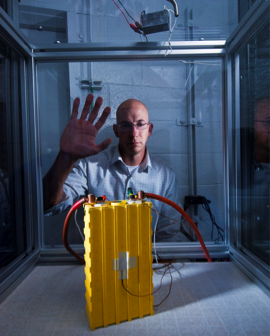
Battery Abuse Testing Laboratory (BATLab)

Facility • The Battery Abuse Testing Laboratory (BATLab) at Sandia is an internationally recognized leader in energy storage system safety research. The BATLab is committed to serving the energy storage community and the national interest with cutting-edge research programs, the highest quality testing results, and leadership in battery safety and reliability. For more than...

Battery Safety & Materials

Page • Safety is a critical factor to battery technology’s adoption in the electric vehicle marketplace. Well-designed vehicle batteries enhance safety and support consumer confidence in plug-in hybrid electric vehicles (PHEVs) and battery electric vehicles (BEVs). Sandia’s decades of experience in applied materials R&D, systems engineering, and battery abuse testing helps industry...

Benjamin Karlson

Staff Page • Wind Energy Market Barrier Mitigation Researcher. Biography Benjamin leads the Wind Turbine Radar Interference Mitigation (WTRIM) activities for the Wind Energy Design and Experimentation Department at Sandia National Laboratories. He has been a member of the Wind Energy Department since July 2007, and has experience in electric power systems, including...

Benjamin Pierce

Staff Page • Systems Analyst / Data Scientist. Biography Benjamin (Ben) Pierce is a member of the Photovoltaics and Materials Technology Program at Sandia National Laboratories. His current research focuses on improving yield of photovoltaic tracker systems using machine learning, as well as systems and database management of photovoltaic data. Ben earned a...

Bernadette A. Hernandez-Sanchez

Staff Page • Chemist—MHK Advanced Materials & Coatings. Biography Bernadette A. Hernandez-Sanchez has been with the Water Power Technologies Program since 2009 and is a principal member of the technical staff. Bernadette leads the Advanced Materials Program and the Department of Energy’s MHK Composite Materials Database. The applied research and development from these...

Bioenergy

Page • Sandia provides the foundational science and technology to enable the production of renewable fuels and bio-advantaged products from biomass. Sandia’s Biological Sciences research facilitates and safeguards the nation’s bioeconomy. Sandia focuses on lignocellulosic, waste, and algal biomass feedstocks. Sandia’s unique capabilities encompass the areas of synthetic biology, pilot-scale algae cultivation, biomass characterization...

Bioenergy Cybersecurity Workshop presentations now available

News Article, November 21, 2023 • Developing and manufacturing biofuels involve automated, networked technologies at many stages of the process. Just as we secure our computers at work or home, how do we ensure that these technologies—and the biofuel production they support—are protected against hacking, malware, and cyberattacks? The U.S. Department of Energy (DOE) Bioenergy Technologies Office (BETO),...
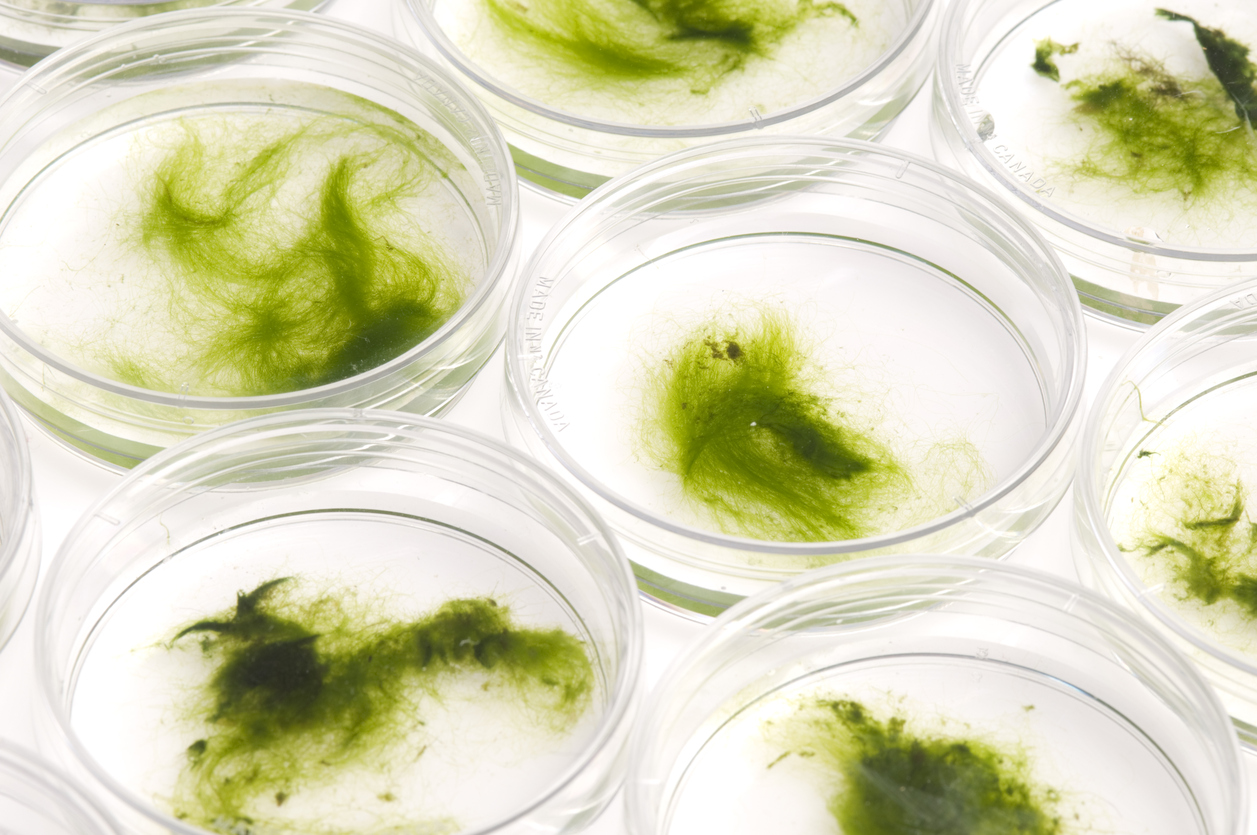
Algae in petri dishes for experiment

Bioscience research holds promise to help address environmental damage

News Article, February 28, 2024 • Palm kernel oil is used in almost 40% of beauty and food products worldwide, but the $12 billion industry is estimated to account for millions of acres lost to deforestation and 10% of global greenhouse gas emissions. Sandia bioscientist Di Liu recently demonstrated novel metabolic routes to produce lipids containing...
Waxen red-orange tinted seeds sit atop a rock.

Black engineer awards distinguish Sandia Labs

News Article, March 9, 2022 • Expertise in advanced modeling and performance shines through Ten Sandia National Laboratories engineers received Black Engineer of the Year Awards this year, including Most Promising Scientist in Government, Research Leadership, Science Spectrum Trailblazers and Modern-Day Technology Leaders. Honorees include Sandia mechanical, electrical, civil, aerospace and aeronautical engineers who excel in...

Blade Materials and Substructures Testing

Page • Blade Materials and Substructures Testing Coupon testing is used to characterize new composite materials to obtain design properties. Wind turbine blades are subjected to a higher number of complex loading cycles not experienced in other applications of composite structures. These loads can lead to structural failure through various mechanisms such...
Results 71–80 of 625