
Siting and Barrier Mitigation
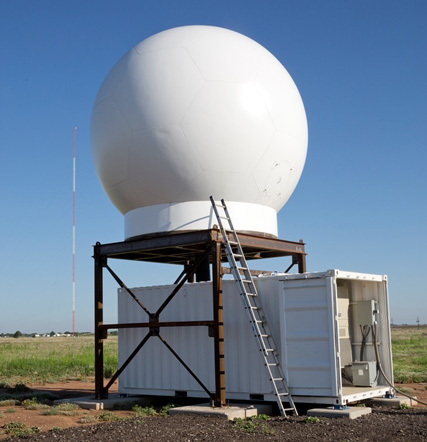
Wind plant installations offer low electricity rates and improve air quality. However, like any form of energy installation, they impact surrounding areas. As the number of large wind plants in the the United States grows, the potential for wind turbines to interfere with radar missions and grid operations increases. Sandia National Laboratories works with industry and government agencies to mitigate potential barriers to successful wind turbine deployment.
Wind turbines have grown in size and capacity with average turbines reaching heights of more than 495 feet from ground to blade tip and operate with tip speeds up to 200 knots (within the range of aircraft speeds). These machines could potentially interfere with existing surveillance radar systems. Because radar technologies are vital to safe air travel, weather prediction, and military operations, Sandia leverages expertise and capabilities from the Wind Energy Technologies and Synthetic Aperture Radar departments to develop blade fabrication techniques to reduce the radar cross section of a wind turbine blade, create wind project siting and development modeling tools, and lead collaborative mitigation efforts with industry and government.
Wind Turbine Radar Interference Mitigation
The Wind Turbine Radar Interference Mitigation (WTRIM) Working Group exists “to fully address wind turbine radar interference as an impact to critical radar missions, ensure the long-term resilience of radar operations in the presence of wind turbines, and remove radar interference as an impediment to future wind energy,” by 2025. The group was established by a Memorandum of Understanding (MOU) between the U.S. Department of Energy, the U.S. Department of Defense, the Department of Transportation’s Federal Aviation Administration, and the Department of Commerce’s National Oceanic and Atmospheric Administration. In addition to the agreement signed by these four partners, the U.S. Department of the Interior’s Bureau of Ocean Energy Management and the U.S Department of Homeland Security are regular participants in WTRIM Working Group activities including providing funding for mitigation research and development.
Research funded through this group has included:
- comprehensive field test campaigns
- radar and turbine model development
- siting tool development
- and other analysis and mitigation technologies.
These efforts have produced great success, but further work remains to fully assess the impacts of wind turbines on radar systems from a single turbine through a national deployment scale.
Downloads
DOE Interagency Field Test & Evaluation of Wind Turbine – Radar Interference Mitigation Technologies
DOE Federal Interagency Wind Turbine Radar Interference Mitigation Strategy
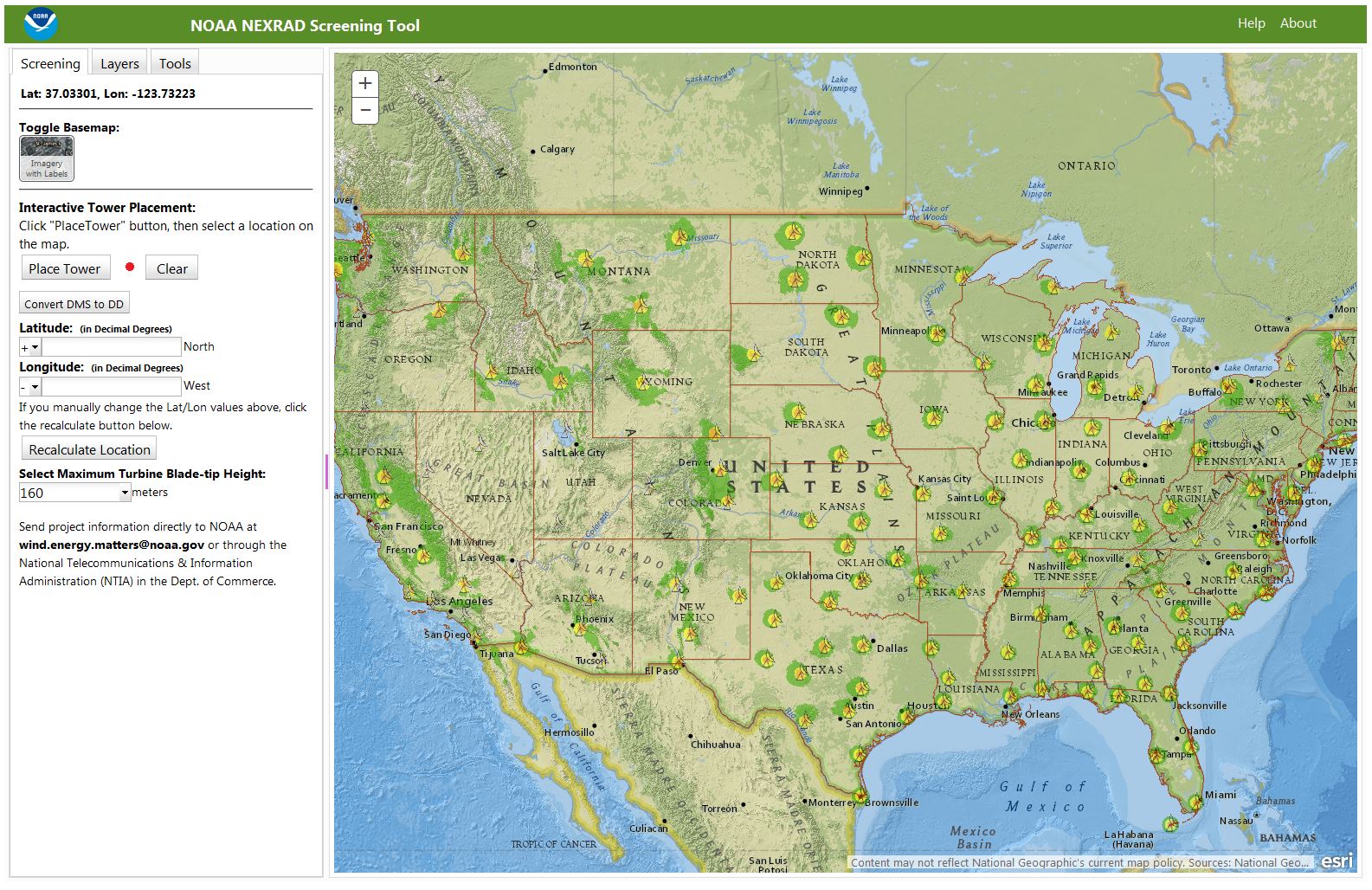
As part of Wind Turbine Radar Interference mitigation (WTRIM) Working Group, Sandia researchers developed the Tools for Siting, Planning, and Encroachment Analysis for Renewables. The TSPEAR toolkit uses existing databases and models to help developers and regulators design, analyze, track, and configure energy projects. Additionally, the TSPEAR toolkit allows the user to run impact analyses of proposed wind turbines on existing air surveillance radars using the developed modified radar models. The Radar Assessment tool computes a number of key parameters that ultimately determine a proposed wind plant development’s Radar Score, scoring each turbine visible to radars in a development. This allows wind developers to conduct exploratory project assessments before submitting specific plans to government agencies for approval.
A collaborative effort between Sandia and National Oceanic and Atmospheric Administration led to the development of a publicly accessible site that provides developers basic NEXRAD viewshed access tailored to produce dynamic (i.e. includes specific turbine heights) viewsheds that are cropped to the county around the selected locations.
Contact screeningtool@peakspatial.com if you have a continuing interest in this capability or any other radar/obstruction issues.
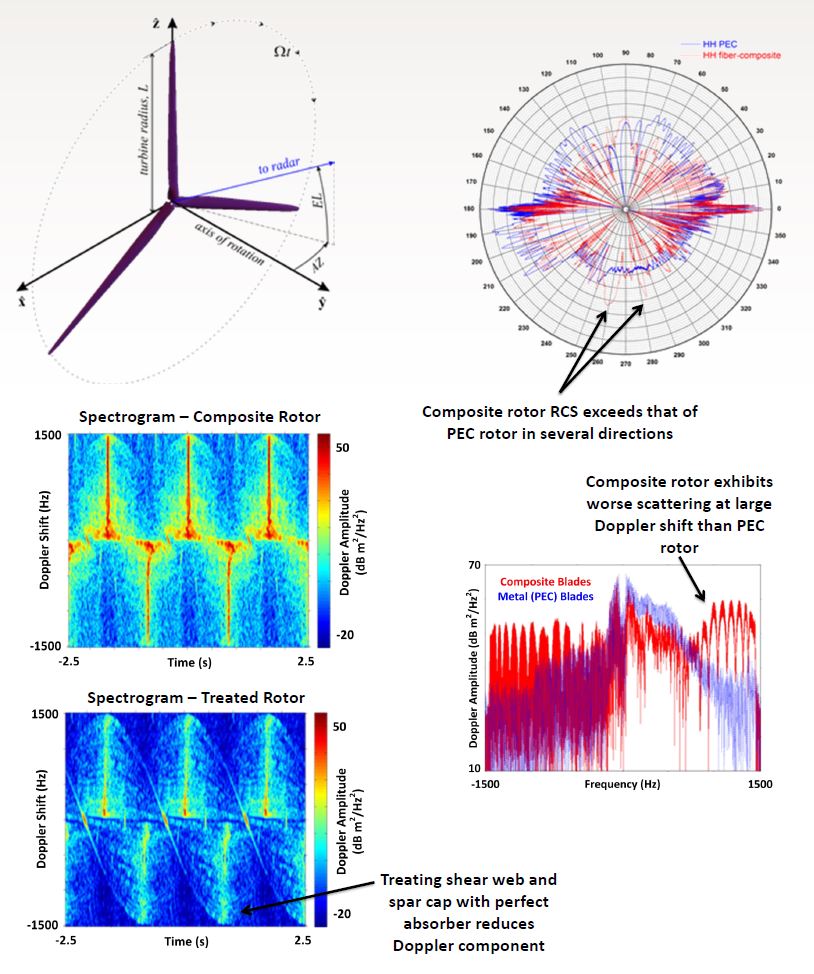
The large radar cross section presented by wind turbine blades is known to interfere with radar operation, and the Doppler shift caused by blade rotation can limit a radar’s ability to identify and track moving targets. To reduce wind turbine radar interference, Sandia developed a low-cost composite laminate treatment compatible with current blade manufacturing processes. This treatment, which addresses all components of a blade’s cross section, was modeled and shown to reduce RCS interference by 20 dB.
Contact
Ben Karlson, Wind Turbine Radar Interference Mitigation (WTRIM)
bkarlso@sandia.gov